Greenhouse Gas Emissions in Garment Factories: How Bangladesh Factories Can Measure and Cut Them
Brands are now asking Bangladeshi suppliers a question they rarely asked ten years ago: how much carbon does your factory emit? The reason is simple. The Apparel Impact Institute put the apparel sector's emissions at 944 million tonnes in 2023, nearly 2 per cent of the global total, and up 7.5 per cent in a year. Most of that sits in the supply chain, so a brand cannot meet its climate target unless its factories cut emissions too.
This guide explains greenhouse gases in plain language, shows where a garment or textile factory's emissions come from, walks through a calculation, and sets out the cuts that work best in Bangladesh.
What are greenhouse gases?
The Earth stays warm because certain gases in the atmosphere trap heat, like the glass of a greenhouse. Burning fossil fuels adds more of these gases, so more heat is trapped and the climate changes. For a factory, four groups matter:
| Gas | Main source in a factory |
|---|---|
| Carbon dioxide (CO₂) | Burning gas, diesel and coal, and electricity from fossil fuel plants |
| Methane (CH₄) | Gas leaks, sludge and wastewater treatment |
| Nitrous oxide (N₂O) | Fuel combustion, in small amounts |
| Fluorinated gases | Refrigerants in air conditioners and chillers |
Gases differ in strength, so everything is converted into one unit: carbon dioxide equivalent (CO₂e). One kilogram of the refrigerant R-410A, for example, traps as much heat as roughly 2,000 kilograms of CO₂, which is why a small leak matters.
Why this matters for Bangladesh
- Buyer targets. Signatories of the UN Fashion Industry Charter for Climate Action must set science-based targets or cut emissions 50 per cent by 2030. Those cuts have to happen in factories like yours.
- The sector's own pledge. According to IEEFA, the Bangladesh garment sector has pledged a 30 per cent cut by 2030, but it may fall well short with efficiency alone.
- Energy cost. Emissions come mostly from energy you pay for, so a cut is usually also a saving.
- What comes next. The EU's carbon border tax does not cover textiles today, but it shows the direction of trade rules. I explained this in Green Industry in Bangladesh.
Scope 1, 2 and 3 in a factory
The GHG Protocol sorts emissions into three scopes. Higg FEM's method follows the same framework.
| Scope | Meaning | Examples in a garment or textile factory |
|---|---|---|
| Scope 1 | Direct emissions from what you own or control | Gas boiler, diesel generator, gas generator, company vehicles, refrigerant leaks |
| Scope 2 | Indirect emissions from energy you buy | Grid electricity, purchased steam |
| Scope 3 | Everything else in your value chain | Fabric, yarn, chemicals, transport, waste, staff commuting |
A common mistake is treating generator electricity as Scope 2. If you burn the fuel yourself, it is Scope 1.
A key fact about Bangladesh: heat often matters more than electricity. A working paper building an emissions inventory for the sector found textile production responsible for 67.8 per cent of emissions and garments for 32.2 per cent, with Scope 1 making up about 85 per cent. It is a preprint rather than a peer-reviewed study, but it fits what you would expect: dyeing and finishing run on steam, and steam runs on gas. So a dyeing mill that installs only rooftop solar has not touched its largest emission source.
A simple worked example
Here is one month at an imaginary factory that makes 500,000 pieces. The emission factors are rounded for illustration.
| Source | Scope | Quantity | Factor | Emissions |
|---|---|---|---|---|
| Grid electricity | 2 | 200,000 kWh | 0.6 kg CO₂e per kWh | 120 tonnes |
| Natural gas for boiler | 1 | 60,000 m³ | 2.0 kg CO₂e per m³ | 120 tonnes |
| Diesel for generator | 1 | 5,000 litres | 2.7 kg CO₂e per litre | 13.5 tonnes |
| Refrigerant top-up (R-410A) | 1 | 2 kg | about 2,088 kg CO₂e per kg | 4.2 tonnes |
| Total | 257.7 tonnes |
That works out at about 0.52 kg CO₂e per piece. The intensity figure matters most, because it shows whether you are improving even when production changes.
On the grid factor, published estimates for Bangladesh differ. One tracker shows about 0.58 kg per kWh for April 2025 to March 2026, and another shows about 0.70 kg for 2025. If you report through Higg FEM, use the factors built into the tool, which are updated each cycle.
The data you need
- Electricity: monthly bills, plus sub-meters for major sections.
- Gas: bills, plus a meter on the boiler if you have a captive generator too.
- Diesel and other fuels: purchase records and a generator logbook.
- Refrigerants: service records showing how many kilograms were topped up, by gas type.
- Production: pieces or kilograms for the same period.
Set a baseline year, keep the method the same, and record any change. Without a baseline you cannot prove a reduction.
What actually cuts emissions
Work in this order: waste less, then improve processes, then change the energy source.
| Lever | Actions | Mainly reduces |
|---|---|---|
| Steam system | Repair leaks and traps, insulate pipes, return condensate, tune boilers, recover flue heat | Scope 1 |
| Compressed air | Repair leaks, lower pressure, turn off when idle | Scope 2 |
| Motors | Servo motors on sewing machines, variable-speed drives on pumps and fans | Scope 2 |
| Lighting and cooling | LED lighting, insulation, ventilation, better chiller maintenance | Scope 2 |
| Wet processing | Lower liquor ratios, right-first-time dyeing, shorter cycles, lower temperatures | Scope 1 |
| Generators | Reduce run hours, maintain them, replace them with solar and storage where it makes sense | Scope 1 |
| Rooftop solar | Generate your own daytime power | Scope 2 |
| Renewable power contracts | Long-term power purchase agreements, when the rules allow | Scope 2 |
| Heat electrification | Heat pumps, electric heating, biomass with care | Scope 1 |
Rooftop solar in Bangladesh
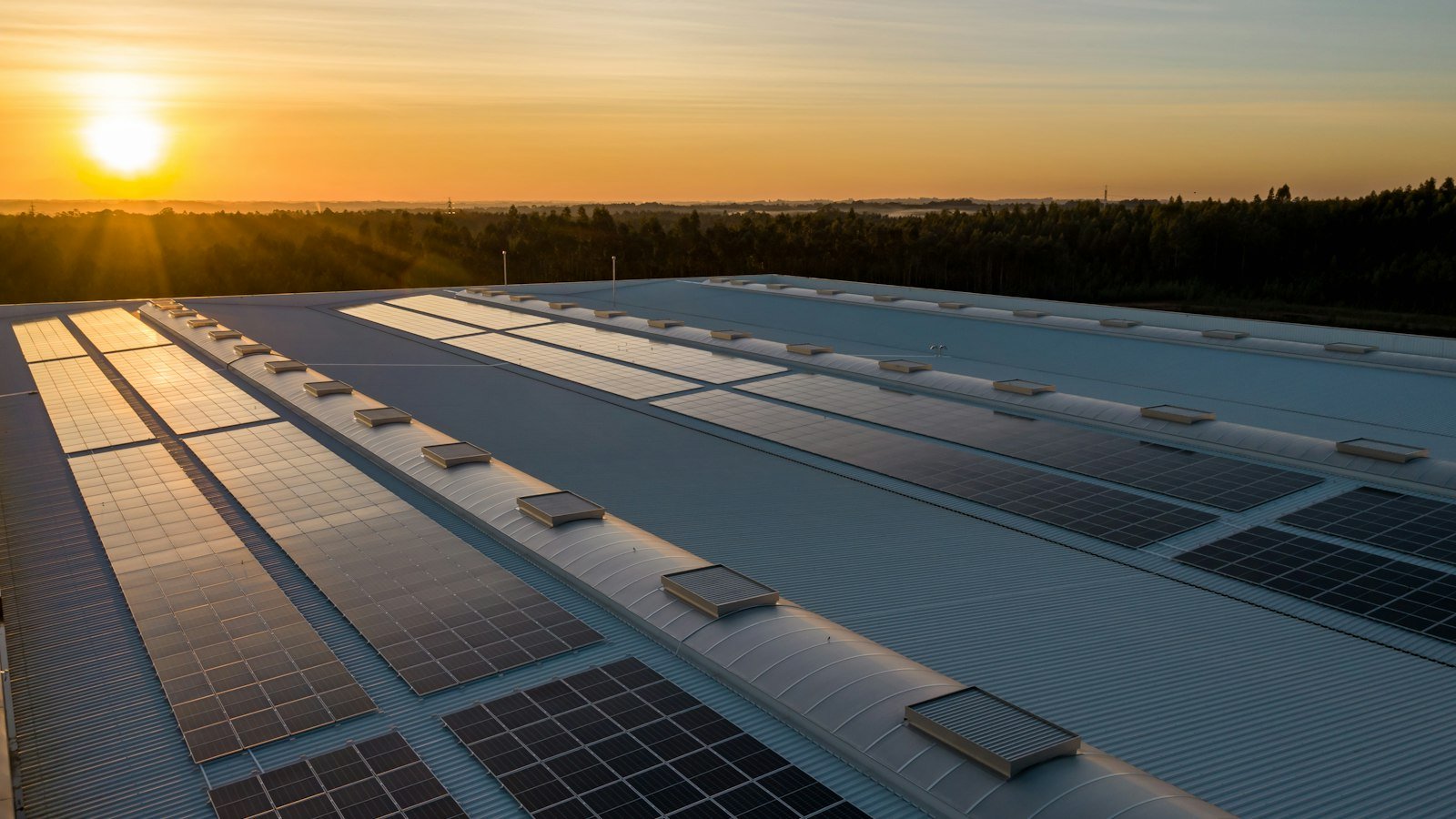
Solar is the most visible step, and there are strong examples. Ha-Meem Group reports 29.2 MWp of rooftop solar and nearly 60 per cent less diesel use. Green Textile Ltd's Unit 4 in Bhaluka has a 733 kW system supplying about 60 per cent of its electricity. But a study of 661 factories found only 31 per cent had adopted any renewable energy, and 94 per cent of those paid entirely from their own funds. IDCOL estimates the rooftop potential on textile, garment and EPZ factories at about 2,815 MWp.
Bigger moves that need partners
Factories cannot do this alone. IEEFA argues that corporate power purchase agreements would let the sector decarbonise faster, and that carbon credits are not a viable answer for factories. Stand.earth estimates that 15 global fashion companies could help Bangladesh avoid 8.59 million tonnes of CO₂ by 2040 by funding the shift away from fossil fuels. H&M Group and Bestseller pledged up to US$100 million in 2023 towards a planned 500 MW offshore wind project near Cox's Bazar, estimated to cut about 725,000 tonnes a year. The latest reports I found still show it at feasibility stage, so treat its timing as uncertain.
One preprint modelled a combined pathway of efficiency, rooftop solar, renewable contracts, electric process heat, low-impact dyeing and recycled fibre, and estimated a cut of about 54 per cent in cradle-to-gate footprint. The number is only a model, but the message is sound: no single measure is enough.
Mistakes to avoid
- Ignoring refrigerants and generators. Both are real Scope 1 sources.
- Claiming renewable electricity without proof. Higg FEM guidance says purchased renewables can only be reported with contractual proof.
- Reporting absolute numbers only. Show intensity per piece or kilogram.
- Changing the method every year. Then your trend means nothing.
- Installing solar before fixing steam. Waste first, generation second.
Frequently asked questions
What is the difference between a greenhouse and greenhouse gas emissions? A greenhouse is a glass building that keeps plants warm. Greenhouse gases trap heat in the atmosphere in a similar way, which gives the effect its name.
Do sewing-only factories need to measure emissions? Yes, if buyers ask, and many do. Their footprint is smaller and mostly electricity and generator fuel, so the calculation is simple.
Does rooftop solar reduce Scope 1? Only if it replaces generator running. Mostly it reduces Scope 2, because it replaces grid electricity.
Can we simply buy carbon credits? Buyers want real reductions in the factory. Credits do not lower your own energy use or energy bill.
How often should we calculate? Monthly tracking is ideal, with a full annual inventory for reporting.
Summary
- Apparel emits about 2 per cent of the world's greenhouse gases, and buyers need factories to help cut them.
- Scope 1 is the fuel you burn, Scope 2 is the energy you buy, and Scope 3 is everything else.
- Steam and fuel can outweigh electricity, especially in wet processing.
- Measure monthly, set a baseline, and report emissions per unit.
- Fix waste first, then processes, then the energy source. Rooftop solar is useful, but it is not the whole answer.
Emissions are also a section of the Higg FEM, and part of the bigger picture in Environmental Impact of the Garment Industry in Bangladesh.
Need help setting up an emissions baseline for your factory? Get in touch.
Sources
- Apparel Impact Institute, Taking Stock of Progress Against the Roadmap to Net Zero 2025
- UNFCCC, Fashion Industry Charter for Climate Action
- IEEFA (2023), Moving towards a green garment sector in Bangladesh
- Biswas et al., SSRN working paper, Developing Greenhouse Gas Emission Inventory for Bangladesh's Textile and Readymade Garment Industries
- Worldly, Introduction to GHG Measurement
- Low-Carbon Power, Bangladesh electricity data
- Inzonex Power Atlas, Bangladesh
- Eurofins, Higg Facility Environmental Module (Higg FEM)
- Mongabay (2026), Despite energy crisis, Bangladesh's factories are slow to adopt solar power: study
- Apparel Views, Epic Group's GTL-4 factory receives highest LEED rating score
- Down To Earth, Fashion giants urged to fund clean energy in Bangladesh garment sector
- The Business Standard, H&M, Bestseller to invest in 500MW offshore wind project in Bangladesh
- Research Square preprint, A Primary-Data Scope 3 Carbon and Water Footprint Inventory of the Bangladesh Ready-Made Garment Sector
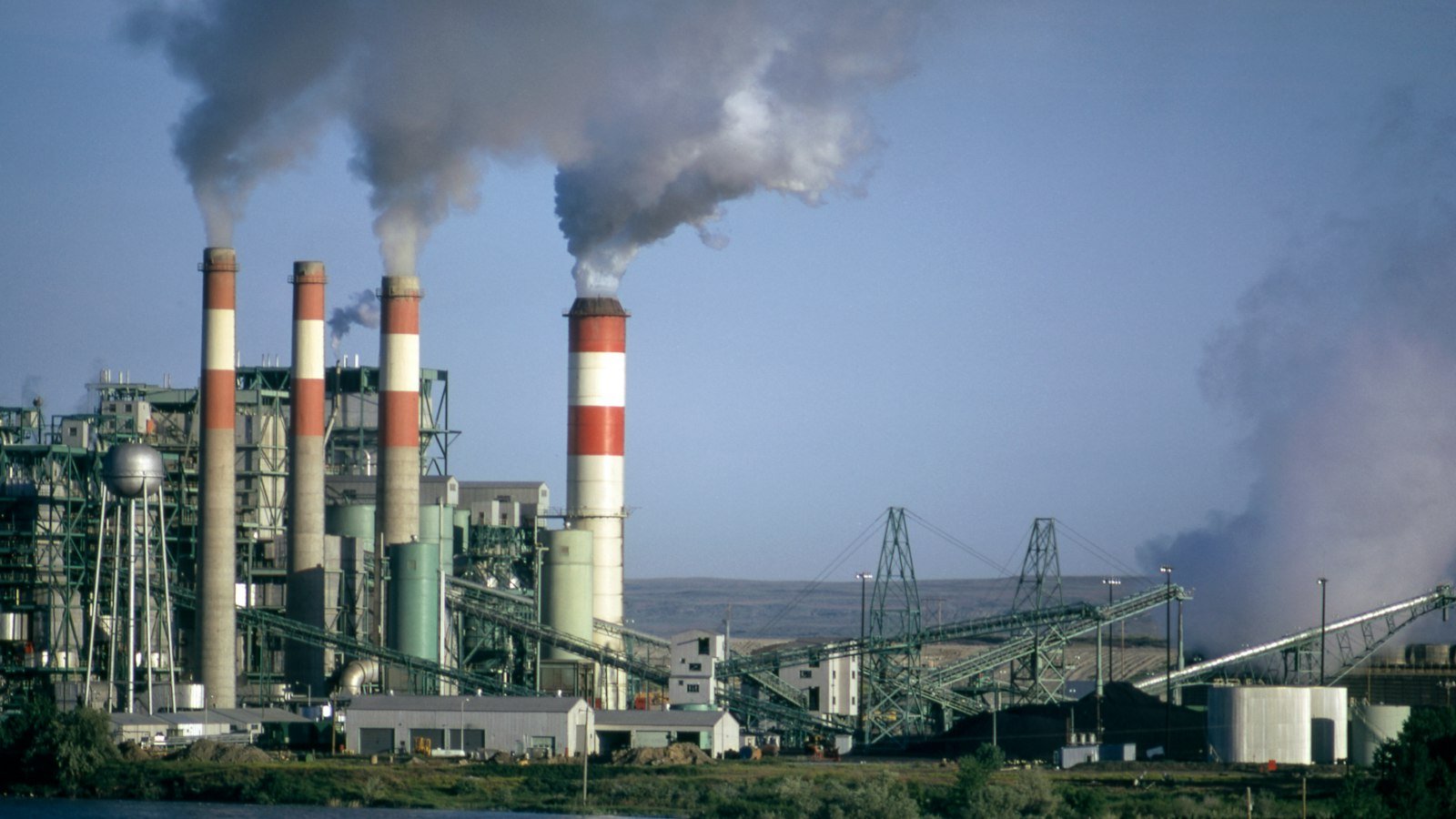
Cover photo: Documerica on Unsplash.