Green Industry in Bangladesh: Why It Matters, Real Examples and Lessons from Other Countries
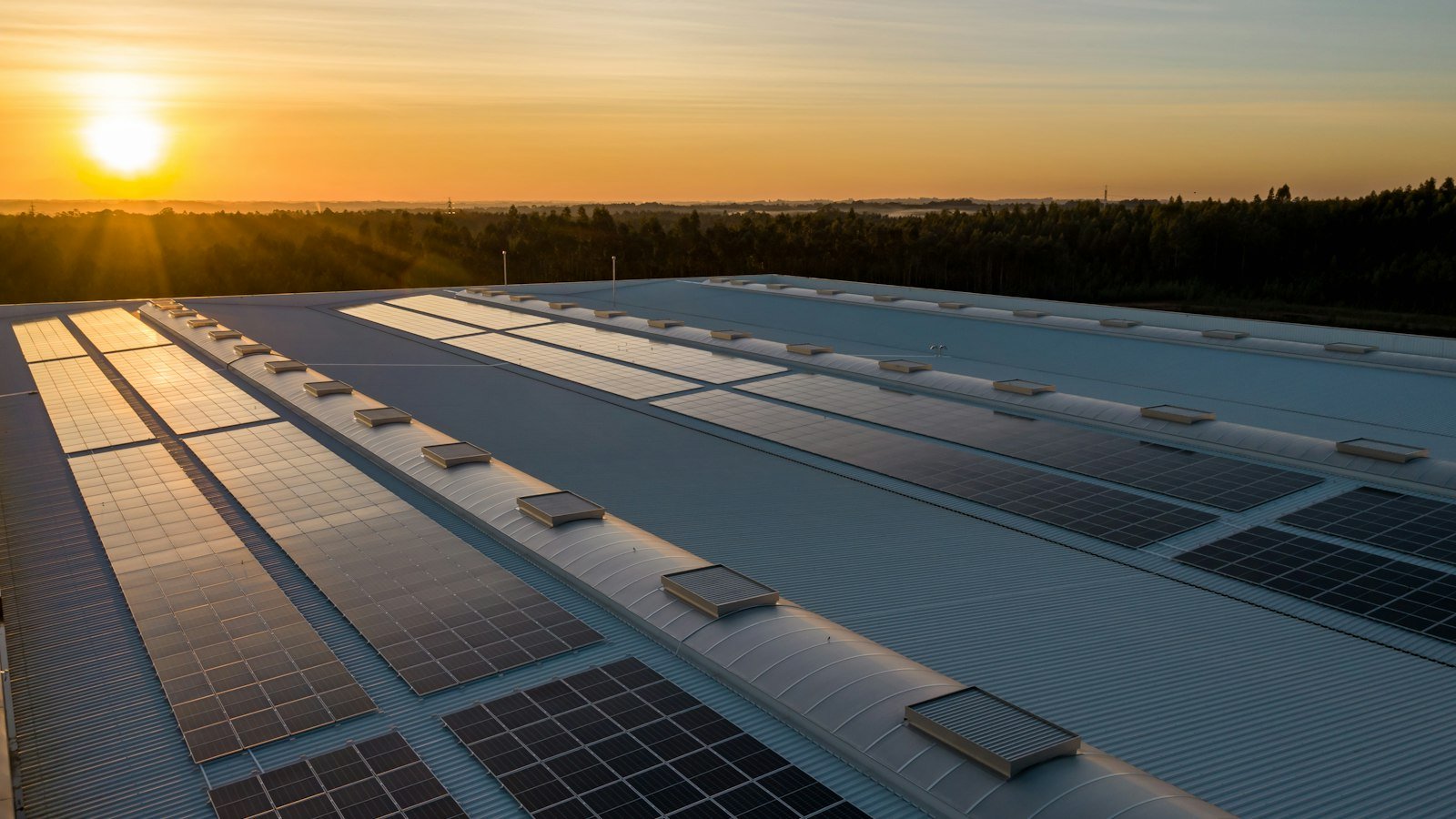
Bangladesh has more LEED-certified green garment factories than any other country. By July 2026 the count had passed 290, and 53 of the 100 highest-scoring LEED factories in the world were Bangladeshi. For a country that usually makes international news for floods, cyclones and factory disasters, that is a remarkable turnaround.
But a green certificate on the wall is only part of the story. Green industry is about how a factory uses energy, water and chemicals every single day, what it does with its waste, and whether the whole economy can keep growing without destroying the land, rivers and air it depends on.
This article explains what green industry actually means, why it matters so much for Bangladesh, what Bangladeshi factories are already doing, what other countries have done, and where the real gaps still are. The sources for every figure are listed at the end.
What is green industry?
The United Nations Industrial Development Organization (UNIDO), which has promoted the idea through its Green Industry Initiative, describes green industry as industrial production that does not come at the expense of nature or human health. In practice it has two parts:
- Greening existing industries. Making the factories we already have cleaner and more efficient: less energy, water and raw material per product, fewer toxic chemicals, less waste and pollution, and a gradual switch to renewable energy.
- Creating new green industries. Building businesses whose product is itself environmental: solar and other renewable energy, recycling, effluent treatment, pollution-control equipment and energy-efficiency services.
On the factory floor, the difference looks like this:
| Area | Conventional factory | Green factory |
|---|---|---|
| Energy | Grid power and diesel generators, little measurement | Sub-meters, efficient motors, heat recovery, rooftop solar |
| Water | Unmetered groundwater, used once | Metered, reused, rainwater harvested |
| Effluent | ETP built for inspections, run irregularly | ETP running every day, with logbooks and lab tests |
| Chemicals | Bought on price, no inventory | Approved lists, full inventory, safety data sheets |
| Waste | Mixed, dumped or burned | Segregated and sold for recycling, including jhut |
| Building | Built for lowest cost | Designed for daylight, ventilation and a lower cooling load |
| Data | Little or none | Monthly energy, water and waste figures shared with buyers |
Why green industry matters for Bangladesh
1. Our export economy depends on it
In FY2024-25 ready-made garments earned US$39.34 billion of Bangladesh's US$48.28 billion merchandise exports, about 81.5 per cent. Most of it goes to brands in Europe and North America that have public climate targets, and those brands can only meet their targets if their suppliers cut emissions too, because most of a clothing brand's environmental footprint sits in its supply chain, not in its offices or shops.
So for a Bangladeshi supplier, environmental performance is no longer a "nice to have". It is increasingly part of what a buyer checks before placing an order, alongside price, quality, lead time and social compliance.
2. Rules in buyer countries are getting stricter
- The EU's Carbon Border Adjustment Mechanism (CBAM) entered its definitive phase on 1 January 2026. For now it covers iron and steel, aluminium, cement, fertilisers, electricity and hydrogen, not textiles, but it shows the direction: carbon emitted in the exporting country is starting to carry a price at the border.
- The EU's revised Waste Framework Directive, in force since 16 October 2025, makes producers pay for collecting, sorting, reusing and recycling the textiles and footwear they sell in the EU. That pushes brands toward durable, recyclable products and toward suppliers who can document their materials and processes.
- BGMEA joined the UN Fashion Industry Charter for Climate Action in 2019. Its signatories commit to reaching net-zero emissions by 2050.
3. Losing LDC trade benefits raises the bar
Bangladesh was due to graduate from Least Developed Country (LDC) status on 24 November 2026. In 2026 UN bodies backed a three-year extension, so graduation is now expected in November 2029. Either way, our duty-free access will eventually depend less on being an LDC and more on meeting conditions. The EU's GSP+ scheme, the most likely route to keep lower tariffs after graduation, requires countries to implement international conventions on labour rights, human rights, the environment and good governance. Factories that already perform well on the environment will find that transition much easier.
4. We are among the countries most exposed to climate change
Bangladesh produces less than half a per cent of global greenhouse gas emissions (about 0.47 per cent by UNDP's count), yet around 60 per cent of its land lies five metres or less above sea level. Our own emissions are small, but how we industrialise still matters: cleaner industry means cleaner air and rivers in our own cities, and a stronger case when we ask the world for climate finance.
In its third Nationally Determined Contribution (NDC 3.0), submitted in September 2025, Bangladesh promises to cut greenhouse gas emissions 6.39 per cent below business-as-usual by 2035 on its own, and a further 13.92 per cent if international finance and technology arrive. Most of those cuts are in energy, and industry is one of the biggest energy users.
5. It saves money
The strongest argument is often the simplest: wasted energy, water and chemicals are wasted money. Gas and electricity supply to factories has been unreliable in recent years, and diesel generators are expensive to run. As the examples below show, many green measures pay for themselves within a few years.
Real examples from Bangladesh
The LEED green factory movement
LEED (Leadership in Energy and Environmental Design) is a green building rating system run by the US Green Building Council. A building earns points for energy and water efficiency, its site, materials and indoor environment; 80 or more of the 110 available points earns Platinum, the highest level.
Bangladesh's numbers:
- 270 LEED-certified garment and textile factories at the end of 2025, after a record 38 new certifications in that year alone.
- 290 by July 2026: 125 Platinum, 145 Gold, and the rest Silver or Certified.
- 53 of the world's top 100 highest-scoring LEED factories are in Bangladesh.
A few landmarks:
- Vintage Denim Studio, Ishwardi EPZ (Pabna) became Bangladesh's first LEED Platinum factory in 2012.
- Green Textile Ltd, Unit 4, Bhaluka (Mymensingh) scored 104 of 110 points in February 2023, the highest score in the world for a newly built factory at that time. A 733 kW rooftop solar plant supplies about 60 per cent of its electricity, it harvests rainwater, and it earned full marks for water efficiency.
- HAMS Garments, Sreepur (Gazipur) scored 108 of 110 points in early 2026 under the LEED rating for existing buildings in operation, which BGMEA describes as a new world record.
- Canvas Garments, Chattogram earned Platinum with 90 points in July 2026, a sign that the movement has spread well beyond Dhaka and Gazipur.
Rooftop solar
Factory roofs are one of Bangladesh's biggest untapped energy resources.
- Ha-Meem Group, one of the country's largest garment exporters, has installed 29.2 MWp of rooftop solar and cut its diesel use by nearly 60 per cent.
- Plummy Fashions, a LEED Platinum knitwear factory since 2015, is about 40 per cent more energy-efficient than a conventional factory and gets around 13 per cent of its electricity from its own rooftop solar.
Adoption is still low, though. A study of 661 factories in Gazipur and Savar, funded by the International Growth Centre, found that only 31 per cent had adopted any renewable energy technology. Of those that did, 94 per cent paid entirely from their own funds; of those that did not, 65 per cent said installation was too expensive. IDCOL estimates the technical potential for rooftop solar on textile, garment and EPZ factories at about 2,815 MWp, needing around Tk 12,670 crore of investment. For comparison, Bangladesh's entire renewable power capacity was 1,822 MWp, just 5.61 per cent of total generation capacity, according to SREDA figures.
Cleaner production that pays for itself: PaCT
The Partnership for Cleaner Textile (PaCT), led by the IFC with international brands and industry associations, helps washing, dyeing and finishing factories find and fix waste in water, energy and chemical use. In its first phase (2013–2017), about 200 factories invested US$16.3 million and saved about US$39 million, along with 21.6 billion litres of water a year. By 2021 the programme covered 381 factories, saving about 27.6 million cubic metres of water and avoiding about 619,000 tonnes of greenhouse gas emissions every year.
Most of these are not high-tech solutions. They are things like fixing steam and compressed-air leaks, recovering condensate and waste heat, insulating pipes, optimising dyeing recipes and reusing rinse water.
Green finance
Bangladesh Bank launched the Green Transformation Fund (GTF) in 2016 with US$200 million, so that export-oriented textile and leather factories could import green machinery and equipment at low interest, and expanded it with €200 million in 2020. Banks also refinance loans for products such as solar systems, effluent treatment plants and energy-efficient equipment.
The weak point is access. Smaller factories often find the paperwork and collateral requirements too heavy, which is one reason most factory solar installations are still self-financed.
Environmental law and the ETP
Under the Environment Conservation Rules 2023, every industrial unit is classified as Green, Yellow, Orange or Red according to its pollution potential and needs clearance from the Department of Environment (DoE). Orange-category projects need an Initial Environmental Examination (IEE), and Red-category projects a full Environmental Impact Assessment (EIA). Factories that produce wastewater, such as dyeing, washing and printing units, must treat it to the national discharge standards, which in practice means running an effluent treatment plant (ETP).
The law's weak point has always been enforcement. An ETP that is built but switched off to save electricity looks fine on paper and still pollutes the river. This is why serious buyers now ask for daily ETP logbooks, flow meters, a separate electricity meter for the ETP and independent wastewater test reports, not just a photo of the plant.
Clean energy at scale: solar home systems
Bangladesh has already shown that it can scale a green technology. Through IDCOL's solar home system programme, more than 4 million systems had been installed by 2017, bringing electricity to more than 12 per cent of the population, mostly in areas the grid did not reach. That experience, with local installers, financing models and supply chains, is a base the industrial solar market can build on.
A warning: the Savar tannery estate
The tanneries were moved from Hazaribagh to Savar to stop them polluting the Buriganga. But the new estate's central effluent treatment plant (CETP) has never worked properly and continues to release untreated water. Without a working CETP, tanneries cannot earn Leather Working Group (LWG) certification, which most international brands require. Leather exports fell from US$397 million in FY2013-14 to US$142.54 million in FY2023-24, and exporters name the unfinished CETP as the biggest obstacle.
The lesson is clear: in global markets, poor environmental infrastructure is not only an environmental problem. It is a trade problem.
What other countries are doing
China: green factories as national policy
China's Ministry of Industry and Information Technology (MIIT) certifies "green factories" against a national standard that covers energy and water efficiency, materials, pollution control and management systems. More than 6,430 factories held national-level green factory status by September 2025. The ministry's latest plan aims for green factories to produce 40 per cent of the country's manufacturing output by 2030, up from just over 20 per cent now.
China also dominates the jobs side of green industry: it accounts for about 44 per cent of the world's 16.6 million renewable energy jobs in 2024.
India: Tiruppur and zero liquid discharge
Tiruppur in Tamil Nadu is India's knitwear capital and very similar to our own knit clusters. For years its dyeing units polluted the Noyyal river. In January 2011 the Madras High Court ordered around 700 bleaching and dyeing units and common effluent treatment plants to close until they achieved zero discharge of effluent. The state government gave ₹127.4 crore in interest-free loans to the common treatment plants, and in June 2012, 18 CETPs reopened with zero liquid discharge (ZLD) systems. Today Tiruppur treats and recycles about 130 million litres of water a day.
It was painful: the closures left nearly 50,000 people without work, and small illegal units were never fully controlled. But it proved that a textile cluster can run on recycled water. For Bangladesh, where dyeing factories around Dhaka, Gazipur and Narayanganj draw heavily on groundwater, that lesson matters.
Denmark: Kalundborg industrial symbiosis
In the Danish town of Kalundborg, a power plant, a refinery, pharmaceutical and enzyme producers and other companies have exchanged steam, water, gas and by-products for decades, so that one company's waste becomes another company's raw material. The partnership now includes 17 public and private companies. It avoids about 586,000 tonnes of CO₂ and 4 million cubic metres of groundwater use every year, and recycles 62,000 tonnes of residual materials.
Bangladesh's economic zones and EPZs are an obvious place to try this: factories sitting side by side could share steam, treated water, solar power and recycling instead of each solving every problem alone.
The European Union: rules that reach Bangladeshi factories
The EU shapes green industry far beyond its borders through regulation: CBAM on carbon-intensive imports, extended producer responsibility for textiles, and ecodesign rules for products. For Bangladeshi exporters, the practical effect is more requests for data: energy use, emissions, chemicals, fibre content and traceability.
| Country | Approach | Lesson for Bangladesh |
|---|---|---|
| China | National green factory certification with output targets | Set measurable national targets, not just showcase factories |
| India (Tiruppur) | Court-enforced zero liquid discharge with shared CETPs | Strict enforcement plus shared infrastructure can transform a cluster |
| Denmark (Kalundborg) | Industrial symbiosis | Economic zones can share energy, water and by-products |
| European Union | Regulation of imports and products | Buyers' laws become suppliers' requirements |
The real challenges in Bangladesh
- A green showcase, not yet a green average. About 290 LEED factories is impressive, but Bangladesh has more than 3,300 active garment factories, and most small and medium ones have not started.
- LEED is a building certificate. It rewards efficient design and operation of the building. On its own it does not prove good chemical management or a properly running ETP. A LEED Platinum factory can still fail a wastewater test.
- Finance does not reach small factories. Green funds exist, but almost all factory solar installations have been paid for out of the owners' own pockets.
- The energy mix is still fossil-heavy. Renewables are only 5.61 per cent of generation capacity, so even efficient factories still run mostly on gas-based grid power and diesel.
- Enforcement and monitoring are weak. ETPs that are switched off, the Savar CETP, brick kilns and small unregistered units show that rules alone are not enough.
- Data and skills are missing. Buyers increasingly want measured energy, water, chemical and carbon data. Many factories do not yet have the meters, trained staff or systems to produce it.
A practical roadmap for a factory
From a compliance point of view, these steps give the best results for the least money, roughly in this order:
- Measure first. Install sub-meters for electricity, gas, steam and water, and record readings monthly. You cannot reduce what you do not measure, and buyers will ask for the numbers anyway, for example in the Higg Facility Environmental Module (Higg FEM).
- Fix the cheap losses. Steam and compressed-air leaks, missing pipe insulation, uncollected condensate, old lighting, and motors without variable-speed drives. The PaCT results show how quickly this pays back.
- Run the ETP every day, and prove it. Keep a daily logbook, a flow meter, a separate electricity meter for the ETP and regular third-party test reports against DoE standards. Treat the ETP as a production line, not a showpiece.
- Control chemicals. Keep an up-to-date chemical inventory with safety data sheets, buy only chemicals that meet a restricted substances list such as the ZDHC MRSL, and train the people who store and handle them.
- Put solar on the roof. Get a structural check of the roof, use net metering where available, and compare self-financing with IDCOL and Bangladesh Bank refinance options.
- Save and reuse water. Harvest rainwater, reuse rinse water in dyeing and, where possible, recycle treated ETP water for toilets, gardening or cooling.
- Segregate waste and sell it. Jhut (fabric cutting waste), cartons, plastic and metal all have recycling markets. Hazardous waste such as ETP sludge and empty chemical containers needs licensed handling.
- Then certify. LEED, ISO 14001 (environmental management) and ISO 50001 (energy management) work best as proof of a system that already runs, not as the goal itself.
Frequently asked questions
Is a green factory the same as a LEED-certified factory? No. LEED certifies the building and how it is operated. A truly green factory also manages chemicals, wastewater, waste and emissions well every day. LEED is a good sign, not the whole picture.
Does going green cost more? Some measures, such as a new LEED building or a large solar plant, need significant upfront investment. Many others, such as fixing leaks, recovering heat and reusing rinse water, cost little and pay back quickly, as the PaCT results show. Over time, lower energy and water bills, fewer production stoppages and stronger buyer relationships usually outweigh the cost.
Which industries in Bangladesh need green transformation most? Textile wet processing (dyeing, washing and printing), leather tanning, cement, steel, ship-breaking and brick kilns all carry heavy pollution or energy loads. Garments get the most attention because of exports, but tanneries and brick kilns are among the worst local polluters.
Can a small factory afford this? Yes, if it starts with measurement and low-cost fixes instead of certification. Shared solutions, such as a common ETP in an industrial park, also help small units that cannot afford their own.
What support does the government offer? Low-interest refinance from Bangladesh Bank for green equipment, IDCOL financing for rooftop solar, and net metering for grid-connected solar systems. The rules are set by the Environment Conservation Rules 2023 and enforced by the Department of Environment.
Summary
- Green industry means making existing industries cleaner and more efficient, and growing new industries that solve environmental problems.
- For Bangladesh it is an economic necessity: about 81 per cent of our exports are garments sold to buyers under growing climate and environmental pressure.
- Bangladesh leads the world in LEED green garment factories, with more than 290 by July 2026, and examples like Green Textile, HAMS Garments and Ha-Meem show what is possible.
- The gaps are in small factories, finance, enforcement, renewable energy and data.
- China, India and Denmark show how national targets, strict enforcement with shared infrastructure, and industrial symbiosis can turn green industry from a showcase into standard practice.
Preparing for an environmental audit, organising ETP and chemical records, or building a compliance system your buyers can trust? Get in touch.
Sources
- UNIDO, Green Industry Initiative for Sustainable Industrial Development
- The Financial Express, Exports fetch $48.28b in FY25
- European Commission, Carbon Border Adjustment Mechanism
- Linklaters, EU revised Waste Framework Directive for food and textile waste published
- BGMEA, BGMEA joins UN Climate Charter
- Dhaka Tribune, LDC graduation: Bangladesh gets 3-year extension till 2029
- UNDP Climate Promise, Bangladesh
- IMF, Country Report on Bangladesh (2019)
- The Financial Express, BD sets fresh target of GHG emission cut by 2035 in NDC 3.0
- BSS, Bangladesh sets new global benchmark in green manufacturing with record LEED certifications in 2025
- Dhaka Tribune, 53 of 100 top green factories now in Bangladesh
- BEPZA, Ishwardi EPZ
- Apparel Views, Epic Group's GTL-4 factory receives highest LEED rating score
- Prothom Alo, World's top eco-friendly factory is in Bangladesh
- BSS, BGMEA accords special reception to HAMS Garments Ltd
- Mongabay, Despite energy crisis, Bangladesh's factories are slow to adopt solar power: study
- The Daily Star, $16.3m green tech saved $39m
- The Business Standard, Joint efforts renewed to decarbonise Bangladesh's RMG sector
- Climate Home News, Bangladesh Bank governor launches $200m green fund
- The Financial Express, BB's green refinancing scheme
- UNEP LEAP, Environment Conservation Rules, 2023 (SRO No. 53)
- LegalSeba, Environmental clearance in Bangladesh under the new 2023 rules
- Centre for Public Impact, Solar home systems in Bangladesh
- Dhaka Tribune, Experts: Bangladesh's leather sector stuck at $1bn mark
- Fibre2Fashion, Bangladesh's leather exports drop 64% in 10 years as CETP not complete
- International Trade Administration, China: Energy green factory certification
- China Daily, China to raise green factories' share of manufacturing output to 40% by 2030
- PV Tech, Solar dominated renewables workforce in 2024: IRENA
- Down To Earth, Tirupur dyeing units told to close
- India Environment Portal, Tirupur units get ₹127-crore relief in interest-free loan
- The Better India, How this Tamil Nadu city recycles 130 million litres of water daily
- International Water Association, Industrial symbiosis and the circular economy of water
- Kalundborg Symbiosis, About the partnership
Cover photo: Nuno Marques on Unsplash.